
Table of Contents
Magicshine vs Garmin: The Quick Take
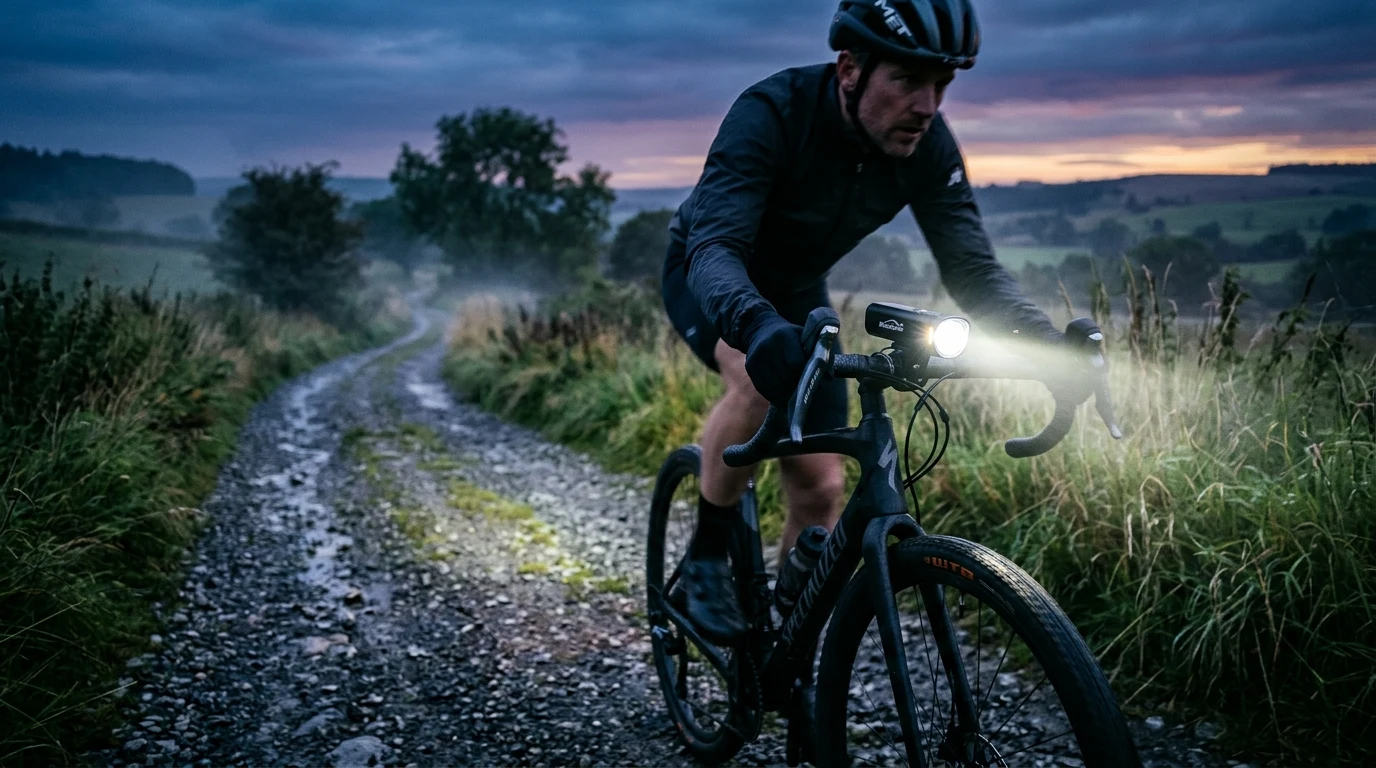
If you ride your bicycle on dark suburban roads, pre-dawn training miles, or unlit gravel backroads, a dependable front headlight is not merely a courtesy—it is a critical safety shield. You need sufficient illumination to spot potholes and road debris at 25 mph, while avoiding shining blinding glare into the windshields of approaching drivers.
When looking for high-performance bike headlights, two of the most recognized names on the handlebars are Magicshine and Garmin (specifically the Garmin Varia UT800):
- Choose Magicshine (Allty / RN series) if your primary objective is raw lumen power, extended battery runtime, and unbeatable value per dollar. Models like the Allty 1500S pump out nearly double the light of the Garmin Varia (1,500 lumens vs 800 lumens), feature massive 4,000 to 5,000 mAh battery packs, include anti-glare road cut-off lenses, and fit standard Garmin-style quarter-turn mounts—all for under $90.
- Choose Garmin Varia UT800 if you are already invested in the Garmin Edge cycling computer ecosystem and value smart automation above all else. The UT800 uses ANT+ to sync with your Garmin head unit, automatically increasing its brightness when you sprint downhill and dimming when you slow to a climb to conserve battery, turning on and off automatically with your ride timer.
Core Comparison: How Magicshine and Garmin Match Up
Here is how their optical outputs, smart features, and battery longevity compare side by side:
| Feature / Metric | Magicshine (Allty 1500S / RN 1500) | Garmin Varia UT800 |
|---|---|---|
| Max Light Output | 1,500 Lumens (intense road & gravel flood) | 800 Lumens (focused urban & road beam) |
| Battery Capacity | 5,000 mAh (21700 cell, high capacity) | ~2,600 mAh internal lithium pack |
| Runtime on High (Steady) | ~1.5 to 2.5 hours at 1,500 lumens (up to 7+ hrs at 500 lm) | ~1.5 hours at 800 lumens |
| Smart Automation | Manual buttons, wireless remote, or mobile app | ANT+ smart integration (speed-adaptive & ambient light sensor) |
| Beam Optics & Road Glare | Anti-glare horizontal beam cut-off (doesn’t blind oncoming cars) | Round spotlight cone (can dazzle oncoming traffic if angled high) |
| Mounting Interface | Garmin quarter-turn base + universal silicone handlebar strap | Garmin quarter-turn out-front dual mount |
| Waterproof Rating | IPX7 (submersible in 1m water for 30 min) | IPX7 (all-weather rainproof) |
| Typical Price Range | $65 to $110 | $120 to $150 |
Magicshine Deep Dive: The High-Lumen Endurance Champion
Magicshine has been a benchmark in bicycle lighting for over a decade. By adopting modern 21700 lithium battery cells and precision optical diffusers, Magicshine lights punch well above their weight class.
Anti-Glare Road Beam Geometry
The standout feature of Magicshine’s Allty and RN road series is the anti-glare optical lens. Rather than projecting an uncontrolled cone of light in every direction, the top of the lens is fluted to direct upper light rays down onto the asphalt. This allows you to run high outputs on dark bike paths without temporarily blinding oncoming cyclists, pedestrians, or drivers.
Massive 5,000 mAh Battery Life
Long winter rides demand endurance. Magicshine packs high-capacity 5,000 mAh batteries that provide comfortable 6-to-10 hour runtimes in daytime flash or medium steady modes. Many Magicshine lights also feature USB-C reverse charging, meaning in an emergency, your bike light can act as a power bank to give your dead smartphone a 20% boost to call for a ride home.
Universal Garmin Quarter-Turn Base
Even though Magicshine doesn’t use Garmin’s ANT+ software, it adopts the physical Garmin quarter-turn mount standard. If you already have a K-Edge or Garmin out-front mount on your stem, you can snap the Magicshine light directly underneath your computer in two seconds with zero bulky bar clamps.
If you need serious night illumination, you can check current Magicshine bike light deals before ordering.
Garmin Varia UT800 Deep Dive: The Smart Cockpit Maestro
While Magicshine wins on sheer power and battery size, the Garmin Varia UT800 is an engineering triumph in seamless software automation.
Speed-Adaptive Dynamic Lighting
When paired with a Garmin Edge computer (like the Edge 540, 840, or 1040), the UT800 adjusts its beam based on your GPS speed data. When you are hammering down a 30 mph descent, the light automatically boosts to full 800-lumen output to project further down the road. When you slow down to 8 mph while grinding up a steep switchback, the light automatically drops to 200 lumens to save battery. You never have to take your hands off the hoods to click a button.
Automatic Power & Ambient Sensing
Press “Start” on your Garmin GPS, and the light automatically turns on. Finish your ride, and it shuts off. If you enter a dark wooded valley or a tunnel, the Edge’s ambient light sensor commands the headlight to brighten immediately. It also integrates with Garmin’s Varia Radar tail lights to form a unified ANT+ bike safety network.
Garmin Considerations
The trade-off is lumen value. For $149, 800 lumens is relatively modest in 2026. If you ride pitch-black technical singletrack trails or heavily potholed rural backroads in pitch darkness, 800 lumens can feel slightly underpowered compared to Magicshine’s 1,500-lumen flood.
Decision Checklist: Which Bike Light Should You Buy?
Go with Magicshine if:
- You ride on unlit country roads, gravel fire roads, or dark multi-use trails and need 1,000 to 1,500+ lumens.
- You want an anti-glare beam cut-off that directs light down onto the road rather than into oncoming eyes.
- You want massive battery life (5,000 mAh) that lasts through 4+ hour winter night rides.
- You want emergency USB-C reverse charging to top off your phone.
- You want the best performance-to-dollar ratio under $90.
Go with Garmin Varia UT800 if:
- You already own and love a Garmin Edge cycling computer.
- You want automated speed-adaptive beam control that brightens during descents and dims on climbs.
- You want a clean, minimalist dual-mount out-front cockpit without separate light controllers.
- Your rides are primarily road training rides under 2 hours at dusk, dawn, or daytime flash.
- You value software integration and automatic power cycling over raw lumen volume.
Frequently Asked Questions
Can Magicshine lights mount to Garmin out-front mounts?
Yes. Almost all modern Magicshine lights (Allty, RN, Ray series) feature built-in Garmin-style quarter-turn male tabs on the bottom of the light, allowing them to twist securely into standard Garmin quarter-turn or GoPro-style underneath adapters.
Is 800 lumens bright enough for pitch-black night riding?
800 lumens is sufficient for paved road cycling up to 20-22 mph where hazards are predictable. However, for fast descents, wet asphalt that absorbs light, or off-road gravel and mountain bike trails, 1,200 to 1,500 lumens provides significantly greater peripheral reaction time.
Are bike lights with anti-glare lenses street-legal in Europe?
Many European nations (especially Germany under StVZO regulations) strictly prohibit symmetrical circular headlights because they blind oncoming motorists. Magicshine designs its road series with horizontal beam cut-offs to comply with community road safety expectations.
{
“@context”: “https://schema.org”,
“@type”: “FAQPage”,
“mainEntity”: [
{
“@type”: “Question”,
“name”: “Can Magicshine lights mount to Garmin out-front mounts?”,
“acceptedAnswer”: {
“@type”: “Answer”,
“text”: “Yes. Most Magicshine road headlights feature Garmin-style quarter-turn mounting tabs that attach directly to standard GPS out-front brackets.”
}
},
{
“@type”: “Question”,
“name”: “Is 800 lumens bright enough for pitch-black night riding?”,
“acceptedAnswer”: {
“@type”: “Answer”,
“text”: “800 lumens works well for moderate road riding, but 1,200 to 1,500 lumens offers far better depth perception for fast descents and rough gravel roads.”
}
},
{
“@type”: “Question”,
“name”: “Are bike lights with anti-glare lenses street-legal in Europe?”,
“acceptedAnswer”: {
“@type”: “Answer”,
“text”: “Yes. Magicshine utilizes horizontal beam cut-offs designed to keep light directed downward onto the roadway without dazzling oncoming vehicular traffic.”
}
}
]
}
Affiliate Disclosure
Some links may be affiliate links. This may earn KerryPicks a commission at no extra cost to you. Recommendations are based on independent research and analysis. Learn more

Related Articles
 Reviews & Buying Guides
Akko vs Gamakay: Which Budget Mechanical Keyboard Brand Fits Your Setup?
 Reviews & Buying Guides
Carpuride vs In-Dash Stereo: Is a Portable Wireless CarPlay Screen Worth It in 2026?
 Reviews & Buying Guides