
Table of Contents
WeRoll Tech vs Segway Ninebot: The Quick Take
In congested metropolitan cities, navigating gridlocked morning traffic or waiting on delayed subway lines has driven millions of urbanites to embrace personal electric micromobility. Lightweight folding electric scooters have emerged as the premier “last-mile” solution—allowing commuters to glide effortlessly from suburban train stations straight to their office desks. Two brands frequently compared by city riders are WeRoll Tech and Segway Ninebot.
While both brands make reliable, battery-powered scooters capable of replacing short car trips, they represent different portability and price brackets:
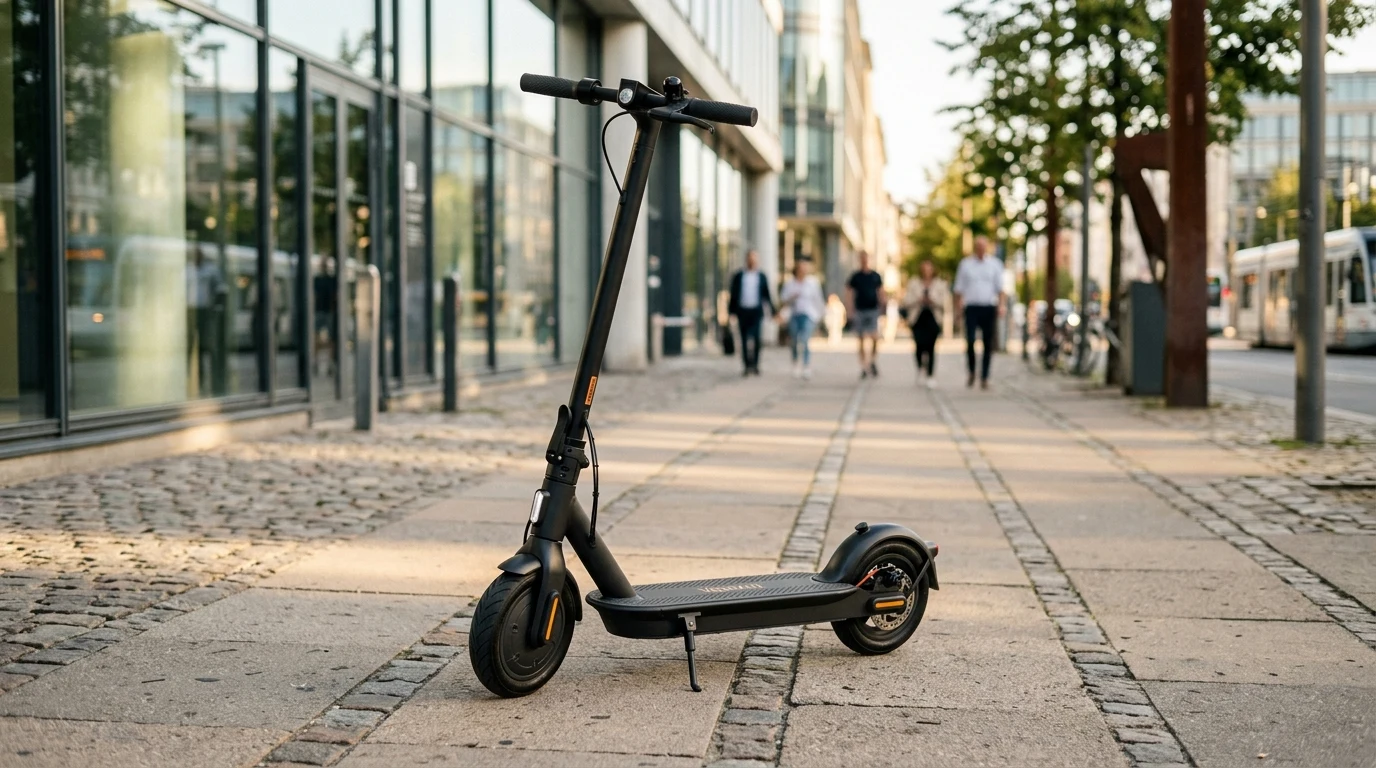
- Choose WeRoll Tech if you prioritize lightweight carryability, compact trunk storage, and exceptional budget value. WeRoll Tech builds nimble, responsive electric scooters weighing roughly 26 to 31 pounds. Featuring 350W brushless hub motors, 8.5-inch honeycomb puncture-proof tires, dual disc-and-regenerative braking, and an intuitive one-step folding latch, WeRoll delivers reliable daily commuting for under $400.
- Choose Segway Ninebot if you want heavy-duty build quality, extended 40-mile battery range, and self-healing pneumatic tires. Segway Ninebot (particularly the legendary *KickScooter MAX G30P* and *F2 Pro*) is the global gold standard for commercial and consumer micromobility. Boasting massive battery packs, rear-wheel drive hill climbing, and sophisticated smartphone app telemetry, Segway offers tank-like durability for $600 to $900.
Core Comparison: WeRoll Tech vs Segway Ninebot
To help you evaluate speed, range, portability, and long-term maintenance, here is how their core commuter electric scooters compare:
| Specification / Feature | WeRoll Tech (Urban Commuter Series) | Segway Ninebot (KickScooter MAX / F-Series) |
|---|---|---|
| Motor Output | 350W Front or Rear Brushless Hub Motor (Peak 500W) | 350W to 450W Rear Brushless Motor (Peak 900W) |
| Top Speed | 15.5 to 19 mph (25 to 30 km/h) | 18.6 to 20 mph (30 to 32 km/h) |
| Advertised Range | 15 to 22 miles per charge | 25 to 40 miles (MAX series) |
| Tire Technology | 8.5″ Solid Honeycomb (100% puncture-proof) | 10″ Pre-slimed self-healing pneumatic tubeless tires |
| Vehicle Weight | Lightweight (~28 lbs / 12.7 kg) | Substantial (~41.2 lbs / 18.7 kg) |
| Braking Architecture | Rear mechanical disc brake + Front E-ABS electronic | Front mechanical drum brake + Rear regenerative electronic |
| Folding & Portability | Quick 3-second one-hand fold; easy stair carry | Sturdy folding stem; heavier to carry up multiple flights |
| Water-Resistance Rating | IPX4 water-resistant | IPX5 machine body / IPX7 battery pack |
| Price Range | $280 to $450 | $500 to $900 |
| Best Application | Subway transfers, college campuses, apartment walk-ups | Long suburban commutes, hilly terrain, heavy rider loads |
WeRoll Tech Deep Dive: Effortless Apartment Living & Zero Flats
For apartment dwellers who live in third-floor walk-ups or commuters who must haul their scooter onto crowded rush-hour train cars, vehicle weight is the deciding factor. This is where WeRoll Tech wins.
Lightweight Aerospace Aluminum & Puncture-Proof Tires
WeRoll Tech constructs its frames from aircraft-grade aluminum alloy, keeping total vehicle weight right around 28 pounds. You can easily pick it up by the stem with one hand, carry it up subway stairs, or stow it in the back of an Uber. Furthermore, WeRoll equips its commuter models with 8.5-inch solid honeycomb rubber tires. Because there is no internal air tube, you will never experience a sudden flat tire on your way to an important morning meeting.
Dual Braking Safety & Crisp LED Display
Safety is built into the cockpit. The handlebar features a bright, anti-glare LED speedometer displaying current speed, riding mode (Eco, Drive, Sport), and battery life. Braking is handled through a synchronized system: a rear mechanical disc brake provides physical stopping bite, while the front motor generates electronic regenerative resistance, bringing you to a smooth, controlled halt.
If you need an affordable, hassle-free ride for your daily city routes, you can check current WeRoll Tech discount offers on KerryPicks to find seasonal savings.
Segway Ninebot Deep Dive: The Heavyweight Range King
Segway is synonymous with personal electric transportation. When ride-share giants like Bird and Lime launched their initial fleets, they relied on Segway Ninebot hardware because it is virtually indestructible.
10-Inch Pneumatic Cushioned Comfort
While solid honeycomb tires eliminate flats, they provide a firmer ride over bumpy cobblestones and cracked pavement. Segway Ninebot solves this by utilizing large 10-inch tubeless pneumatic tires filled with internal sealant gel. If a small nail or sharp piece of glass punctures the tire tread, the internal silicone sealant instantly plugs the hole under air pressure, preserving smooth, air-cushioned shock absorption.
Massive Battery Packs & Smart BMS
If your commute spans 15 miles round-trip, battery anxiety is real. Segway’s MAX line packs massive 551Wh battery arrays governed by a smart battery management system (Smart-BMS) that guards against overcharging, short-circuiting, and thermal runaway. You can ride for days between charges without constantly hunting for wall outlets.
Decision Checklist: Which Electric Scooter Fits Your Commute?
Choose WeRoll Tech if:
- You live in an apartment without an elevator or frequently carry your scooter on subways.
- You want an agile, lightweight ride under 30 pounds that folds in 3 seconds.
- You never want to deal with flat tires, tube patching, or air pumps.
- You are shopping on a practical budget under $450.
Choose Segway Ninebot if:
- Your daily commute covers long distances (15 to 30+ miles round trip).
- You ride over cracked asphalt or brick paths and want the plush cushion of 10-inch air tires.
- You are a heavier rider (200+ lbs) tackling steep hill inclines.
- You want an industry-leading smart app with electronic motor locking and firmware tuning.
Frequently Asked Questions
Can electric commuter scooters climb steep city hills?
Yes, though performance depends on motor wattage and rider weight. WeRoll Tech’s 350W motor comfortably handles gentle to moderate city inclines of 10 to 15 degrees. For steep hills (18 to 22 degrees), higher-torque rear-wheel drive models like the Segway Ninebot MAX provide stronger climbing power.
Are electric scooters allowed on public transit like trains and buses?
Most major metropolitan transit authorities permit folded electric scooters on commuter trains and subways, provided they do not block aisles or doorways. Lightweight models like WeRoll Tech are significantly easier to tuck between your knees on crowded train cars.
How long does the battery last before needing replacement?
Both brands utilize high-grade lithium-ion battery cells rated for 500 to 800 full charge cycles before dropping to 80% original capacity. For typical commuters charging two to three times a week, the battery pack will perform reliably for 3 to 5 years.
{
“@context”: “https://schema.org”,
“@type”: “FAQPage”,
“mainEntity”: [
{
“@type”: “Question”,
“name”: “Can electric commuter scooters climb steep city hills?”,
“acceptedAnswer”: {
“@type”: “Answer”,
“text”: “Yes, 350W motors easily manage 10-15% city inclines, while higher-wattage rear-drive scooters handle steeper 20% slopes.”
}
},
{
“@type”: “Question”,
“name”: “Are electric scooters allowed on public transit like trains and buses?”,
“acceptedAnswer”: {
“@type”: “Answer”,
“text”: “Most transit networks allow folded electric scooters on subways and trains as long as they are kept compact and out of aisleways.”
}
},
{
“@type”: “Question”,
“name”: “How long does the battery last before needing replacement?”,
“acceptedAnswer”: {
“@type”: “Answer”,
“text”: “Quality lithium-ion packs endure 500-800 charge cycles, providing 3-5 years of dependable daily commuting.”
}
}
]
}
Affiliate Disclosure
Some links may be affiliate links. This may earn KerryPicks a commission at no extra cost to you. Recommendations are based on independent research and analysis. Learn more

Related Articles
 Reviews & Buying Guides
Akko vs Gamakay: Which Budget Mechanical Keyboard Brand Fits Your Setup?
 Reviews & Buying Guides
Carpuride vs In-Dash Stereo: Is a Portable Wireless CarPlay Screen Worth It in 2026?
 Reviews & Buying Guides