
Table of Contents
Navigating congested downtown traffic, soaring parking garage rates, and crowded commuter trains has turned personal micro-mobility from a niche hobby into an everyday transit necessity. YOU GUYS, there is truly nothing worse than buying a so-called “portable” electric bike only to realize it weighs sixty-five pounds, won’t fit into your elevator, and leaves dirty chain grease all over your work trousers before 9:00 AM. Having logged thousands of urban transit miles across rain, hills, cobblestones, and subway platforms, we created this comprehensive buying guide to break down motor power curves, battery watt-hour math, carbon belt drives, and folding latch safety so you pick the perfect micro-mobility ride on your very first try.
| Evaluation Factor | Ultra-Light Folding E-Bikes | Commuter Electric Scooters | All-Terrain E-Skateboards |
|---|---|---|---|
| Typical Vehicle Weight | 35 to 42 lbs (16 to 19 kg) | 26 to 34 lbs (12 to 15 kg) | 22 to 28 lbs (10 to 13 kg) |
| Drivetrain Mechanism | Maintenance-Free Carbon Belt Drive | Direct-Drive Brushless Hub Motor | Dual High-Torque Belt / Direct Drive Motors |
| Real-World Urban Range | 35 to 60 miles (Pedal Assist) | 18 to 28 miles (Full Throttle) | 20 to 32 miles (Carving / Commuting) |
| Transit & Storage Fit | Fits in car trunks, under desks, train racks | One-click stem fold; carried with one arm | Stands upright against walls or lockers |
| Featured Brand Specialists | ADO E-Bike | WeRoll Tech | Onsra |
Step 1: Vehicle Weight vs Carry Portability — The 40-Pound Reality Check
Manufacturers love to label any electric vehicle with a hinge as “portable,” but carrying a 65-pound fat-tire e-bike up three flights of apartment stairs will quickly cure you of that illusion. When evaluating micro-mobility, weight determines whether you will actually use the vehicle daily:
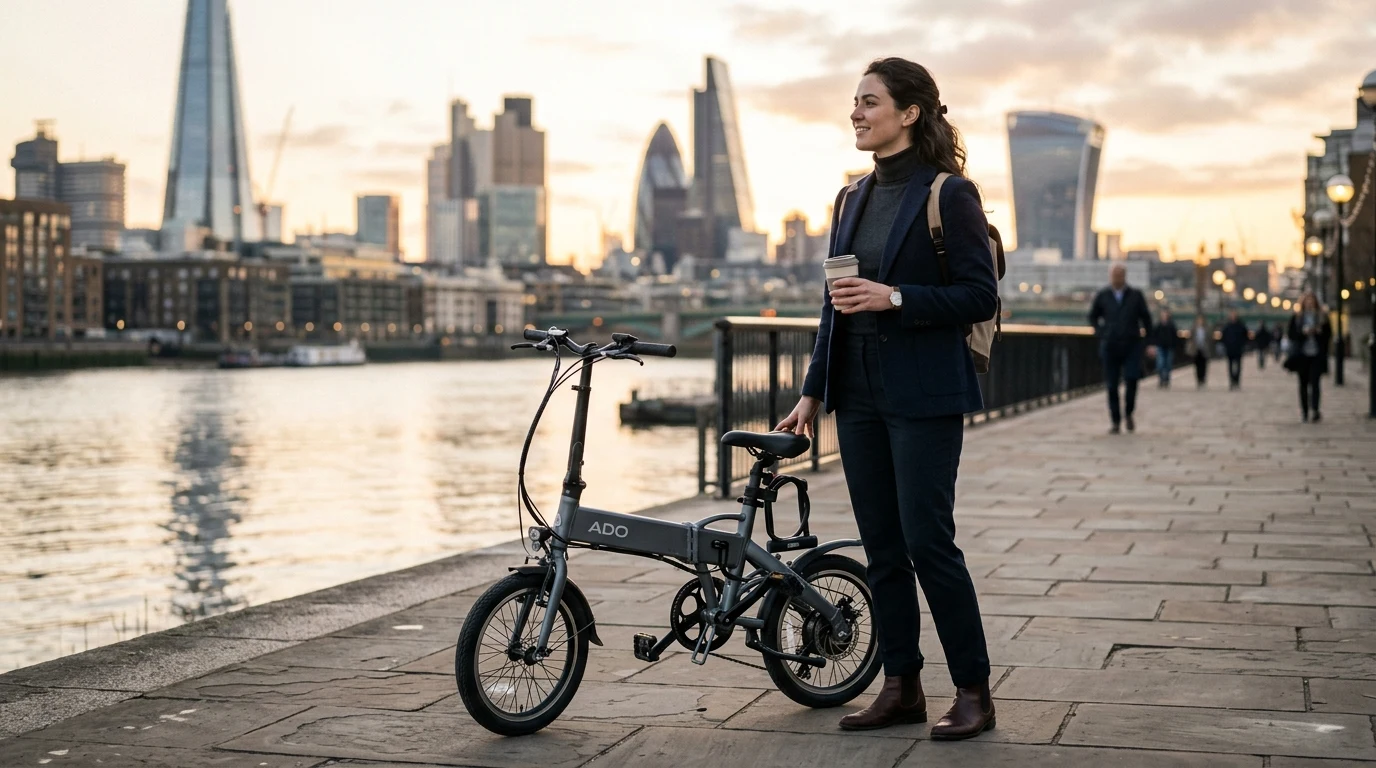
- Sub-38 Pounds (True Multi-Modal Commuting): If you need to carry your ride onto subways, up bus steps, or into compact office elevators, prioritize ultra-light frames engineered from 6061 aircraft aluminum or carbon fiber. Models like the ADO Air 20 hit this sweet spot by shedding heavy multi-speed derailleurs in favor of streamlined single-speed carbon belts.
- 38 to 50 Pounds (Trunk & Garage Friendly): Manageable for lifting into SUV trunks or storing in ground-floor apartment corners, but tiring to carry across long train stations.
- Over 50 Pounds (Dedicated Road Riding): Best treated as standard utility vehicles where folding is an occasional storage convenience rather than a daily carrying routine.
My colleague Brian used to struggle with a clunky, greasy commuter bike that took up his entire studio apartment hallway. When he tested the ADO Air with its clean belt drive, he was able to fold it in ten seconds and slide it right under his work cubicle. See our full structural testing in the ADO E-Bike vs Heybike folding bike review.
Step 2: Drivetrain Selection — Carbon Belt Drives vs Traditional Metal Chains
For city transit riders, the biggest mechanical headache is the traditional metal chain. Greasy chains require regular degreasing, collect road grit, rust when exposed to rain, and easily stain your office trousers during morning rides. In 2026, premium commuter folding bikes utilize Carbon Belt Drives (such as Gates Carbon Drive systems).
Carbon-reinforced polyurethane belts require zero lubrication, never stretch, operate in near-total silence, and last up to 20,000 miles without maintenance—over three times the lifespan of a steel bike chain. You can pick up the bike by the frame, throw it over your shoulder, and walk into an executive boardroom without a single smudge of black oil on your clothes.
Step 3: Pedal Assist Sensors — Torque Sensors vs Cadence Sensors
If you choose an electric bike, understanding the difference between sensor types is critical to your ride comfort and safety:
- Cadence Sensors (Budget / Jerky): These act like basic on/off switches. They detect when the pedal cranks are rotating and deliver a burst of electric power after a half-turn delay. This can feel unnatural and cause unexpected surges when navigating tight pedestrian sidewalks.
- Torque Sensors (Enthusiast / Intuitive): Torque sensors measure exactly how much pressure your legs exert on the pedals in real time. If you pedal gently, the motor provides a subtle whisper of assist; push hard to accelerate up a steep hill, and the motor instantly ramps up power. The sensation feels like having bionic legs with zero jerky acceleration lag.
Step 4: Commuter Electric Scooters & Skateboards — Last-Mile Speed & Stability
For commuters whose daily journey involves a 1-to-3 mile sprint from the subway station to the office, a lightweight electric scooter or electric skateboard offers unmatched agility:
- Electric Scooters: Look for pneumatic (air-filled) or honeycomb puncture-resistant tires between 8.5 and 10 inches. Solid hard plastic wheels transmit brutal vibrations across cobblestones and sidewalk cracks. Models like WeRoll Tech feature reinforced stem-locking collars that eliminate dangerous handlebar wobble at 15 to 20 MPH speeds. Read our full comparison in the WeRoll Tech vs Segway Ninebot guide.
- All-Terrain Electric Skateboards: For open asphalt paths and carving enthusiast trails, high-end electric skateboards from brands like Onsra feature dual brushless motors, CNC double-kingpin trucks, and cloud wheels that roll effortlessly over road debris and train tracks. Explore our performance metrics in the Onsra vs Evolve skateboard comparison.
Budget Tiers & Finding Verified Urban Transit Savings
Micro-mobility pricing generally falls into three performance brackets:
– $350 – $600: Reliable last-mile electric commuter scooters with 15–20 mile range.
– $800 – $1,400: Premium folding electric bikes featuring torque sensors, carbon belt drives, and integrated hydraulic disc brakes.
– $1,400+: High-power all-terrain electric skateboards and dual-motor extended-range commuter platforms.
I was devastated when ADO’s limited spring bundle sold out during peak bike-to-work week, but whenever I catch a $100 to $150 promo code active on our ADO E-Bike coupon hub or the WeRoll Tech store page, securing premium city transit hardware for under a thousand dollars feels like an incredible win. Don’t forget to review our curated shortlist in our Best Folding E-Bikes & Electric Scooters Roundup.
Common Micro-Mobility Buying Mistakes to Avoid
- Believing Manufacturer Lab Range Claims: Quoted ranges are calculated using a 130-pound rider on flat terrain in eco mode with zero headwind. In real-world urban conditions with stop-and-go lights and minor inclines, expect roughly 65% to 75% of the advertised maximum range.
- Skipping UL 2849 / UL 2272 Battery Certifications: Never purchase an uncertified generic electric vehicle. Look for UL battery certification, which guarantees testing against thermal runaway, short circuits, and fire hazards during charging.
- Overlooking Water Resistance Ratings: If you commute year-round, ensure your ride carries at least an IPX4 water resistance rating to safely handle road spray and sudden rain showers.
Final Urban Mobility Buying Checklist
Before completing your purchase, ensure your new commuter vehicle meets these core standards:
✅ Total weight under 40 lbs for daily carrying
✅ Maintenance-free carbon belt drive or sealed brushless hub motor
✅ Intuitive torque-sensing pedal assist (for e-bikes)
✅ UL-certified lithium-ion battery pack with IPX4+ water resistance
✅ Dual mechanical or hydraulic disc brakes for wet stopping power
Wishing you guys breezy, sweat-free morning commutes, smooth rides across town, and massive savings on your new electric wheels this season!
Affiliate Disclosure
Some links may be affiliate links. This may earn KerryPicks a commission at no extra cost to you. Recommendations are based on independent research and analysis. Learn more

Related Articles
 Reviews & Buying Guides
Akko vs Gamakay: Which Budget Mechanical Keyboard Brand Fits Your Setup?
 Reviews & Buying Guides
Carpuride vs In-Dash Stereo: Is a Portable Wireless CarPlay Screen Worth It in 2026?
 Reviews & Buying Guides