
Table of Contents
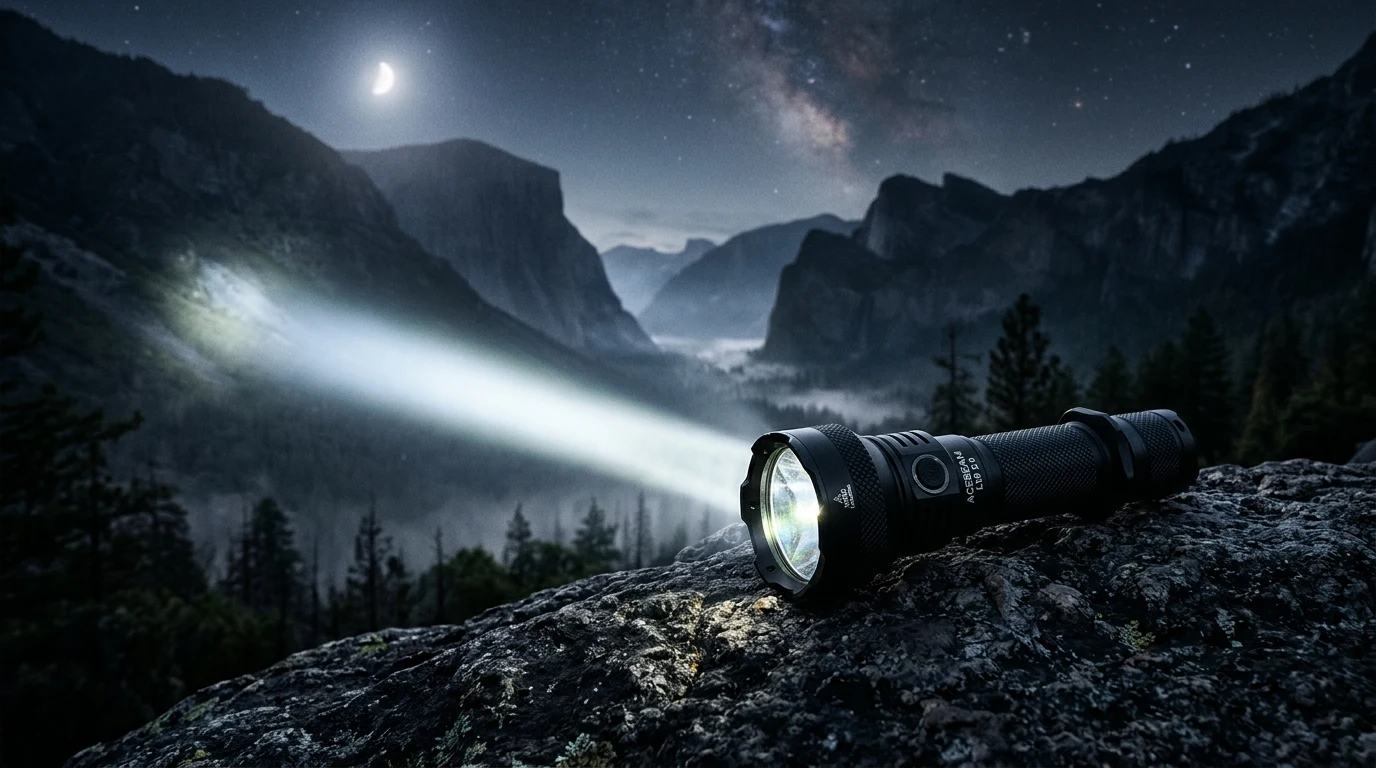
Whether you are pedaling home along unlit suburban bike paths after dark, fixing a blown radiator hose on a desolate highway shoulder, or navigating a power outage at home, having reliable, high-output illumination is an essential safety requirement. YOU GUYS, there is truly nothing more dangerous or frustrating than trusting a cheap hardware store flashlight with inflated “100,000 Lumen” marketing claims, only to have the beam thermal-throttle to a faint candle glow in forty seconds or blind oncoming drivers because of poor optical shaping. Having tested beam candela meters, thermal step-downs, and battery run-times across hundreds of tactical and cycling lights, we put together this complete buyer’s guide to give you the honest facts on lumens, beam throw, anti-glare lens cuts, and battery chemistry.
| Lighting Category | Optics & Beam Profile | Key Advantage & Use Case | Battery Platform | Specialist Brand |
|---|---|---|---|---|
| Pocket EDC Flashlights | Smooth / Orange-Peel Reflector (Balanced hotspot with wide peripheral spill) | Ultra-compact pocket carry, tail-click switch, instant tactical turbo mode | 14500 Li-ion / Standard AA Alkaline Dual-Fuel | Lumintop |
| Road & Trail Bike Headlights | Engineered Anti-Glare Cutoff Lens (StVZO compliant downward beam horizon) | Illuminates road surface up to 150m without blinding oncoming drivers or pedestrians | Internal 21700 USB-C Rechargeable with Garmin Quarter-Turn Mount | Magicshine |
| Panoramic Headlamps | 230-Degree Flexible COB LED Strip (Even, shadowless wide flood beam) | Hands-free close-up mechanical repairs, trail running, campsite setup | Integrated Li-Polymer with Motion-Sensor Wave Activation | Lumeo Creatives |
Step 1: Lumens vs Candela — Why Raw Lumen Numbers Lie
The most common trap in portable lighting is shopping purely by “lumens.” Lumens measure the total volume of light emitted in all directions from the LED diode. However, how that light is focused determines whether you can actually see what lies ahead of you:
- Lumens (Total Light Output): 1,000 lumens spread out across a wide 180-degree angle will softly illuminate a small room or campsite table, but won’t reach ten yards down a dark country lane.
- Candela (Beam Intensity & Throw Distance): Candela measures the concentration of light in the central hotspot. A compact 800-lumen flashlight with 25,000 candela will throw a focused beam over 300 meters into the distance, cutting right through fog and darkness.
- Thermal Step-Down (The Turbo Secret): High-output LEDs generate intense heat. Any compact flashlight advertising “3,000 lumens” will only sustain that maximum output for 30 to 90 seconds before internal thermal sensors automatically step the brightness down to 400–600 lumens to prevent diode burnout. Look for sustained output runtime charts rather than peak burst numbers.
Step 2: Road Safety Optics — Why Commuter Bike Lights Need Cutoff Horizons
If you cycle on roads, greenways, or city streets, mounting a standard round-beam tactical flashlight to your handlebars is both rude and hazardous. Circular beams project high-intensity light upward into the retinas of oncoming motorists, blinding them and increasing accident risks.
Dedicated commuter bike lights from brands like Magicshine feature precision anti-glare optical lenses inspired by modern automotive low-beam headlights. These lenses project a sharp horizontal cutoff line that focuses 90% of the light onto the asphalt directly ahead of your front tire while keeping the upper visual plane dim. This illuminates potholes, glass shards, and road debris crystal clearly without blinding other road users. Read our full optical comparison in the Magicshine vs Garmin bike light review.
Step 3: Battery Platforms — Dual-Fuel Flexibility & Fast USB-C Charging
Your lighting is only as reliable as the power cell inside it. In 2026, there are three primary battery formats you should consider:
- Dual-Fuel AA / 14500 (Pocket EDC): The pinnacle of convenience. You can run high-drain 14500 lithium-ion batteries for maximum 600-to-900 lumen bursts, but in an emergency, you can grab a standard 1.5V AA alkaline battery from any grocery store or TV remote and the light still operates. Lumintop’s Tool AA line mastered this dual-voltage versatility. See our hands-on evaluation in the Lumintop vs Olight comparison.
- 21700 High-Capacity Lithium-Ion (Heavy Commuter & Tactical): Packing 5,000mAh of energy, 21700 cells provide the best balance of multi-hour runtimes and high sustained current draw for 1,000+ lumen continuous cycling headlights.
- USB-C Direct Charging: Look for lights that feature weather-sealed USB-C ports on the flashlight body or directly integrated into the battery casing, eliminating the need to carry bulky external charging cradles while traveling.
Step 4: Hands-Free Wide Flood — Panoramic Headlamps
For close-quarter tasks like engine bay inspections, under-sink plumbing repairs, or setting up a tent after midnight, a focused flashlight hotspot causes severe eye fatigue due to glare bouncing off reflective surfaces. A wide-angle COB LED strip headlamp (like Lumeo Creatives) wraps around your forehead, casting a wide, shadow-free 230-degree halo of soft daylight across your entire field of view.
My neighbor Tom, who works on vintage cars in his garage every weekend, used to constantly drop his heavy metal flashlight between engine blocks. When he switched to a silicone strip headlamp with gesture-control on/off sensors, he told me it saved him hours of frustration. Check out our hands-free testing in the Lumeo Creatives vs Black Diamond comparison.
Budget Tiers & Finding Verified Discount Codes
High-performance illumination doesn’t require a commercial industrial budget:
– $20 – $40: Excellent pocket EDC dual-fuel torches (Lumintop Tool AA) with titanium or copper collector variants.
– $45 – $90: High-lumen commuter bike headlights with StVZO anti-glare optics and Garmin quarter-turn handlebar mounts.
– $100+: Heavy-duty dual-emitter mountain bike trail systems and search-and-rescue throwers.
I was so bummed out when Lumintop’s limited copper edition sold out before Christmas last year, but whenever I see a 15% to 20% discount code active on our Lumintop store coupon hub or the Magicshine coupon page, picking up backup lights for car gloveboxes and emergency packs feels like an incredible steal. Make sure to also check our curated Best EDC Flashlights & Bike Lights Roundup.
Common Lighting Mistakes to Avoid
- Falling for No-Name “90,000 Lumen” Scams: If a $15 flashlight on a discount marketplace claims tens of thousands of lumens, it is physically impossible. Real 10,000-lumen torches require massive cooling fins, weigh several pounds, and cost upwards of two hundred dollars.
- Ignoring Ingress Protection (IP Ratings): Outdoor gear will inevitably face rain and mud. Insist on at least an IPX6 (heavy rain resistant) or IPX8 (fully submersible to 2 meters) rating with oiled silicone O-rings.
- Overlooking Cool White vs High CRI Diode Tints: Cheap blue-tinted cool white LEDs (6500K) wash out trail details and camouflage tree roots. High CRI (Color Rendering Index >90) emitters render wood, skin, and trail textures in accurate, natural color.
Final Lighting Buyer’s Checklist
Before checking out, verify your new torch or bike light meets these essential criteria:
✅ Honest lumen and candela ratings with realistic thermal runtimes
✅ Engineered anti-glare downward beam cutoff (for cycling)
✅ Dual-fuel versatility or high-capacity 21700 USB-C charging
✅ IPX6 or IPX8 waterproof rating with aircraft-grade aluminum casing
✅ Simple, intuitive user interface with instant one-click memory
Wishing you guys bright, crystal-clear trails, safe night commutes, and fantastic savings on all your everyday carry gear this year!
Affiliate Disclosure
Some links may be affiliate links. This may earn KerryPicks a commission at no extra cost to you. Recommendations are based on independent research and analysis. Learn more

Related Articles
 Reviews & Buying Guides
Akko vs Gamakay: Which Budget Mechanical Keyboard Brand Fits Your Setup?
 Reviews & Buying Guides
Carpuride vs In-Dash Stereo: Is a Portable Wireless CarPlay Screen Worth It in 2026?
 Reviews & Buying Guides