
Table of Contents
Botslab vs VIOFO: The Quick Take
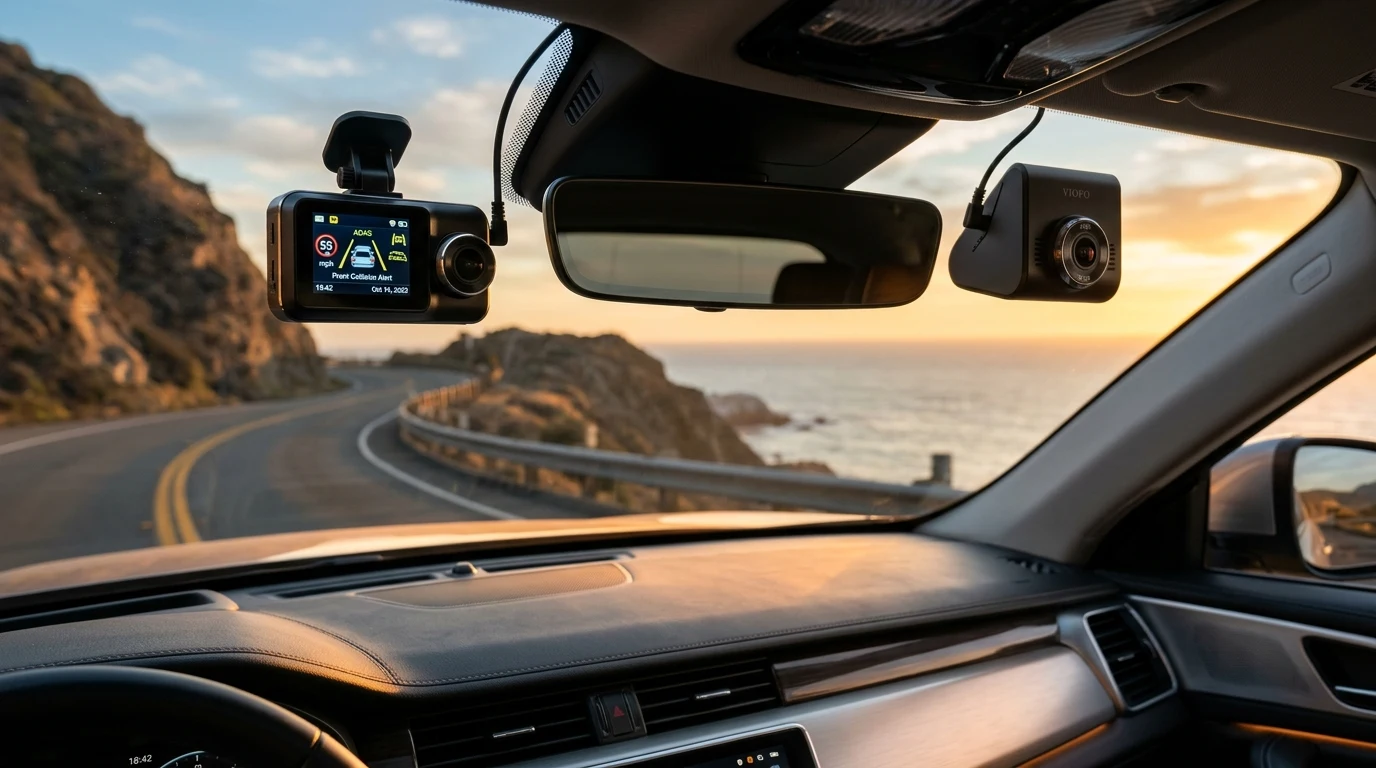
In an era of distracted driving, reckless hit-and-runs, and fraudulent insurance claims, a reliable dash cam is no longer an optional car accessory—it is essential financial protection. But when shopping for a premium 4K system, you will quickly encounter two prominent names that cater to very different types of drivers: Botslab and VIOFO.
Here is our direct bottom line on how their cameras, image sensors, and surveillance features compare:
- Choose VIOFO if your top priority is uncompromising forensic video clarity and license plate capture at night. VIOFO is the enthusiast benchmark because it integrates cutting-edge Sony STARVIS 2 sensors with true high dynamic range (HDR). If you need crystal-clear license plate numbers on a fast-moving car under glare from oncoming headlights, VIOFO’s raw optical performance remains unmatched.
- Choose Botslab if you want a modern, smart-connected dash cam with wide multi-channel cabin and perimeter coverage. Botslab models (like the G980H and G500H Pro) offer intuitive smartphone app integration, crisp built-in IPS screens for instant roadside playback, and unique 3-channel and 4-channel setups with rotatable side lenses that monitor your vehicle’s side doors and cabin simultaneously.
Core Comparison: How Botslab and VIOFO Match Up
To evaluate their optics, recording capabilities, and hardware reliability, compare their core specifications below:
| Feature / Metric | Botslab (G-Series / Pro) | VIOFO (A229 Pro / A119 Mini 2) |
|---|---|---|
| Image Sensor Tech | Sony IMX415 / Omnivision with AI Night Vision | Sony STARVIS 2 (IMX678 front / IMX675 rear) |
| Max Video Resolution | True 4K UHD (3840 x 2160) @ 25fps | True 4K UHD (3840 x 2160) @ 30fps |
| Night Vision & Plate Capture | Good in urban lighting; can blow out headlight reflections | Exceptional (STARVIS 2 HDR resolves fast-moving plates) |
| Available Channels | 1-CH, 2-CH, and unique 3-CH / 4-CH perimeter setups | 1-CH, 2-CH, and 3-CH (Front, Rear, Interior) |
| Power Source / Heat Rating | Supercapacitor (-20°C to 70°C / -4°F to 158°F) | Supercapacitor (-20°C to 65°C / -4°F to 149°F) |
| Display Screen | 2.45″ to 3.0″ high-definition IPS color screen | Compact 2.0″ LCD or screenless wedge design |
| Parking Mode Features | Collision trigger & time-lapse (hardwire kit required) | Buffered event recording, time-lapse, low bitrate |
| Smartphone Connectivity | Botslab App (5GHz Wi-Fi + quick video export) | VIOFO App (5GHz Wi-Fi + dual-band connectivity) |
| Price Range | $100 to $190 | $120 to $330 |
Image Quality & Sensor Breakdown: Why STARVIS 2 Matters
The biggest technical difference between these two brands lies in their optical sensor selection.
VIOFO’s Forensic Clarity
VIOFO was among the first manufacturers to adopt Sony’s second-generation STARVIS 2 back-illuminated sensors across its front and rear cameras. STARVIS 2 doubles the dynamic range and low-light sensitivity compared to older image sensors. On dark country roads or wet highways, high-speed license plates typically look like white smeared rectangles on standard dash cams due to reflective headlight glare. VIOFO’s hardware-level HDR calculates high and low exposures simultaneously, allowing you to read plate numbers that other cameras wash out completely.
Botslab’s Daytime & Urban Performance
Botslab cameras record crisp, richly saturated 4K footage during daylight hours. Road signs, lane markers, and vehicle makes are razor-sharp. In well-lit urban environments, Botslab’s AI night algorithms brighten shadows and keep surrounding traffic clearly documented.
However, Botslab typically caps 4K recording at 25 frames per second on some dual configurations, whereas VIOFO pushes a fluid 30 frames per second. At highway speeds (65+ mph), those extra 5 frames per second can mean the difference between a sharp freeze-frame of a fleeing vehicle’s bumper and a slightly blurred image.
If you want a sleek, modern camera with easy app controls, you can check current Botslab discounts before ordering.
Coverage Options: Botslab’s Multi-Angle Advantage
Where Botslab truly innovates is in vehicle perimeter coverage. While VIOFO excels at front, rear, and interior cabin views, Botslab designed modular cameras with rotatable side pods.
For Uber, Lyft, and rideshare drivers—or drivers who frequently street-park in tight downtown neighborhoods—having camera lenses aimed out the side passenger and driver windows is invaluable. If someone keys your side door, bumps your mirror while squeezing into a spot, or confronts you during a traffic dispute, Botslab’s multi-angle configurations record angles that traditional front-and-back cameras miss entirely.
Parking Mode & Thermal Reliability
Both brands prioritize long-term vehicle safety by ditching volatile lithium-ion batteries in favor of heat-resistant supercapacitors. In hot summer weather, a windshield can easily reach 140°F (60°C). Lithium batteries tend to swell, leak, or fail under extreme heat, whereas supercapacitors withstand severe temperature swings from freezing winters to scorching heatwaves.
Parking Mode Logic
To use 24/7 parking surveillance on either camera, you will need a 3-wire hardwire kit installed into your vehicle’s fuse box:
- VIOFO’s Buffered Parking Mode: When parked, VIOFO continuously buffers video in temporary memory. If an impact or motion sensor triggers, it saves the 15 seconds before the collision occurred, as well as the 30 seconds after. This ensures you see the car backing into you, rather than just the aftermath.
- Botslab’s Collision & Time-Lapse Mode: Botslab switches into an energy-efficient low-framerate time-lapse mode, or sleeps until the G-sensor detects a shock, instantly powering up to lock the emergency footage.
Decision Checklist: Which Dash Cam Should You Install?
Go with VIOFO if:
- Your #1 priority is reading license plates at night and capturing legally undeniable accident evidence.
- You want the superior low-light performance of genuine Sony STARVIS 2 sensors.
- You prefer a discreet wedge design that hides neatly behind your rearview mirror.
- You want buffered parking recording that captures the seconds leading up to an impact.
- You are a tech enthusiast who values high bitrates and firmware customization.
Go with Botslab if:
- You want comprehensive 3-channel or 4-channel coverage that monitors vehicle side windows and cabin blind spots.
- You are a rideshare driver who wants an all-in-one security setup.
- You want a bright built-in IPS screen for effortless menu navigation and instant playback without your phone.
- You value polished mobile app controls and quick social video sharing.
- You want a feature-rich 4K system for under $180.
Frequently Asked Questions
Do I need a hardwire kit for parking mode to work?
Yes. Both Botslab and VIOFO require a continuous 12V power supply to monitor your vehicle while the ignition is turned off. A 3-wire hardwire kit connects to your car’s fuse box and includes automatic low-voltage cutoff to prevent your car battery from draining dead.
Can I use any standard micro-SD card?
No. 4K dash cams write continuous high-bitrate video streams that will burn out standard consumer SD cards in a few months. Both manufacturers strongly recommend using High Endurance micro-SD cards (such as SanDisk Max Endurance, Samsung PRO Endurance, or VIOFO’s branded cards) rated for continuous write cycles.
Can you turn off audio recording in the car?
Yes. Both cameras have dedicated physical mute buttons or quick-toggle settings on their screens and mobile apps, allowing you to easily disable the interior microphone whenever you want privacy.
{
“@context”: “https://schema.org”,
“@type”: “FAQPage”,
“mainEntity”: [
{
“@type”: “Question”,
“name”: “Do I need a hardwire kit for parking mode to work?”,
“acceptedAnswer”: {
“@type”: “Answer”,
“text”: “Yes. Continuous parking surveillance requires a 3-wire hardwire kit tied into your fuse box, which provides continuous power with battery low-voltage cutoff protection.”
}
},
{
“@type”: “Question”,
“name”: “Can I use any standard micro-SD card?”,
“acceptedAnswer”: {
“@type”: “Answer”,
“text”: “No. Continuous 4K writing demands high-endurance memory cards (like SanDisk High Endurance or Samsung PRO Endurance) to prevent video corruption and premature card failure.”
}
},
{
“@type”: “Question”,
“name”: “Can you turn off audio recording in the car?”,
“acceptedAnswer”: {
“@type”: “Answer”,
“text”: “Yes. Both dash cams feature one-touch mic mute buttons and app toggles to disable audio recording whenever passengers or drivers prefer privacy.”
}
}
]
}
Affiliate Disclosure
Some links may be affiliate links. This may earn KerryPicks a commission at no extra cost to you. Recommendations are based on independent research and analysis. Learn more

Related Articles
 Reviews & Buying Guides
Akko vs Gamakay: Which Budget Mechanical Keyboard Brand Fits Your Setup?
 Reviews & Buying Guides
Carpuride vs In-Dash Stereo: Is a Portable Wireless CarPlay Screen Worth It in 2026?
 Reviews & Buying Guides
[…] My sister Rachel was involved in a scary hit-and-run in a grocery store parking lot. Her Botslab dash camera’s G-sensor instantly locked the emergency clip in 4K clarity, capturing the fleeing truck’s plate perfectly for the police. See our comprehensive sensor breakdown in the Botslab vs VIOFO dash cam review. […]