
Table of Contents
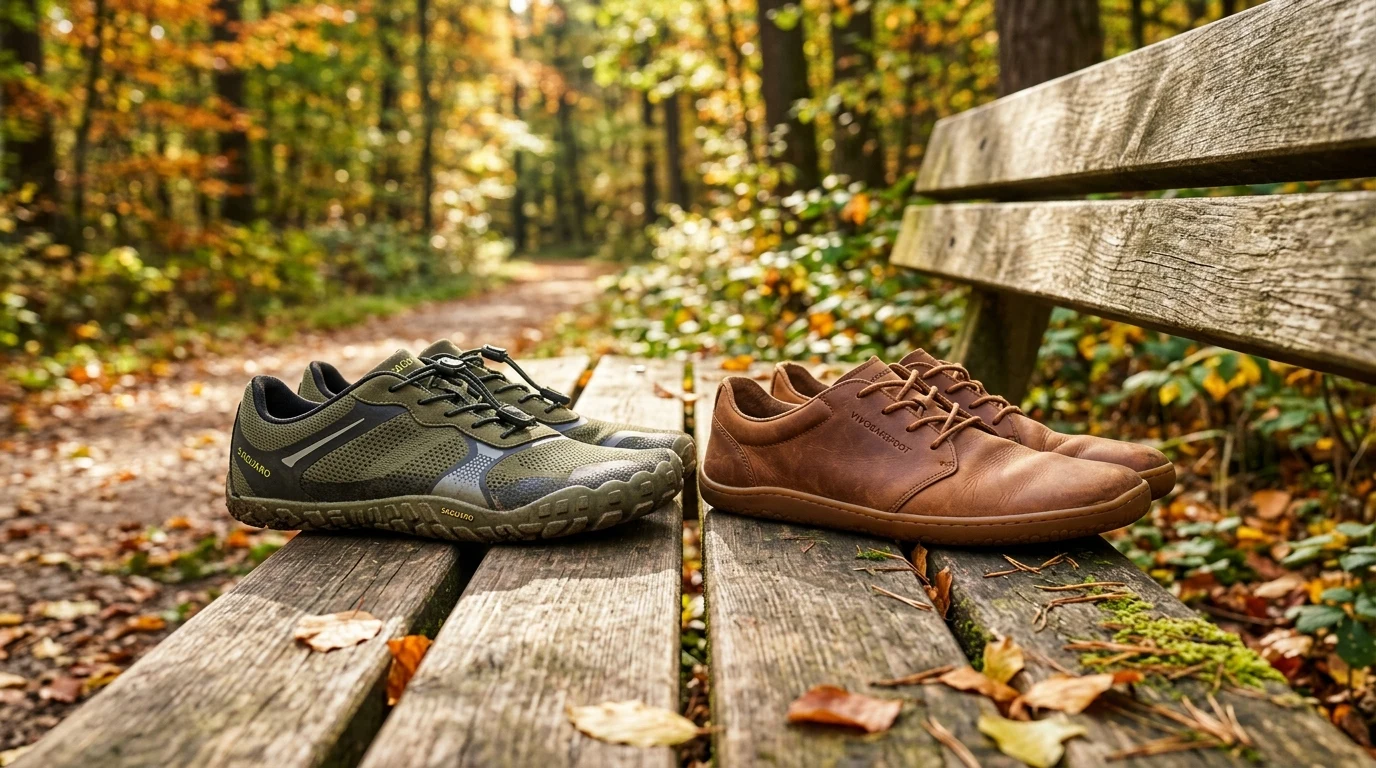
Thinking about trying barefoot shoes but not sure whether to start cheap or go all-in? Saguaro and Vivobarefoot sit at opposite ends of the minimalist footwear market, and the right choice depends on where you are in your barefoot journey — not just your budget.
The short version: Saguaro is a practical, low-risk way to find out if barefoot shoes work for you. At $35–$60 a pair, you won’t feel burned if you decide minimalist footwear isn’t your thing. Vivobarefoot is the premium commitment — $140–$270+ — built for people who already know they want barefoot shoes and are ready to invest in sustainable materials, serious ground feel, and long-term durability with a resoling program. Neither is universally better; they serve different stages of the same journey.
We have an affiliate partnership with Saguaro. Vivobarefoot is not a KerryPicks partner — we include them because they’re the most common comparison point and our research should cover both sides fairly.
Sole Design and Ground Feel
This is what barefoot shoes are really about: how much of the ground you can actually feel underfoot.
Both brands use outsoles in the 3–4 mm range, which is thin enough for genuine ground feedback. The difference is in how each brand handles the out-of-the-box experience.
Saguaro ships most models with a removable foam insole that’s thicker than you’d expect in a minimalist shoe. With that insole in, the ground feel is muted — it honestly feels more like a flexible conventional sneaker. The trick that barefoot community members consistently recommend? Take the insole out. Without it, the sole gets noticeably thinner, flexibility improves, and you start getting real proprioception — the sensory feedback from the terrain that’s the whole point of going barefoot. If you’re transitioning from conventional shoes and your feet are still tender, the insole-in stage can actually work as a gentler starting point before going fully thin.
Vivobarefoot is designed for maximum ground feel from the start. Their patented puncture-resistant soles keep the base thin while protecting against sharp debris. You’ll feel pebbles, textures, and surface contours much more directly than with Saguaro’s stock setup. Trail models add thicker tread lugs but keep the base layer thin and flexible.
Worth knowing: within each brand, model selection matters. Saguaro’s Luck line uses a thinner tread pattern for better ground feel compared to their chunkier water-shoe styles. With Vivobarefoot, their firm-ground trail soles feel different from their everyday casual models. Check the specific model, not just the brand name.
Upper Construction and Materials
The stuff your foot is actually wrapped in tells you a lot about what you’re paying for.
Saguaro uses synthetic meshes and vegan textiles. The uppers are breathable — genuinely good for warm weather, water activities, and gym sessions. The trade-off is that the materials feel noticeably more budget-oriented. “Plastic-y” is how some reviewers describe it, which isn’t unfair. These aren’t shoes that develop a rich patina over time; they’re functional, light, and inexpensive.
Vivobarefoot invests heavily in materials: bio-based EVA, high-performance knits, and premium leathers (including wild-hide leather from ethically sourced independent farms). Their leather boots and casual shoes genuinely improve with wear if you condition them properly. The sustainability angle is real — this is a brand that designs for circularity, not just marketing language.
If you’re buying barefoot shoes for casual walks and gym use and you plan to replace them every year or so, Saguaro’s materials do the job. If you’re looking for shoes that feel like a considered purchase and age gracefully, that’s Vivobarefoot’s territory.
Sizing and Fit
Both brands feature wide anatomical toe boxes designed to let your toes spread naturally — that’s fundamental to barefoot footwear. But getting the right fit takes a bit more attention than with conventional shoes.
Saguaro’s sizing is the bigger headache. Their online sizing chart can suggest EU sizes that look dramatically different from your usual number, which understandably confuses people. The consistent advice from the barefoot community: measure your feet in centimeters rather than trusting your standard US or EU size, and consider sizing up by half to a full size. Toe box width also varies by model — the Luck line runs wider than some of their casual sneaker styles. If you have wide feet or bunions, check the specific model’s width, not just the general brand reputation.
Vivobarefoot’s sizing is more consistent, partly because their foot-shaped lasts are more refined and standardized across the range. The same barefoot sizing advice applies — measure in centimeters, allow room for splay — but you’re less likely to be caught off guard by wild inconsistencies between models.
Practical tip for either brand: compare the sole length measurement with a shoe you already own and like the fit of. That’s more reliable than any size chart conversion.
Durability and Cost of Ownership
Here’s where the price gap starts to make more sense — or less, depending on how you think about it.
Saguaro shoes hold up reasonably well for casual wear, gym sessions, and everyday walking. Most users report several months to about a year of regular use before the tread wears down or the structure starts to break down. Heavy runners or rugged hikers will burn through them faster. There’s no repair or resoling program — at $35–$50 a pair, the practical approach is simply to replace them. Over three years of casual use, you might buy two or three pairs, totaling roughly $100–$150.
Vivobarefoot is built differently. Without thick foam midsoles, there’s no compression breakdown — many users log hundreds to over a thousand miles. The thin outsoles can wear down on abrasive asphalt, but here’s where the sustainability model kicks in: Vivobarefoot’s ReVivo Repair Service offers professional resoling at roughly $125–$145 USD (including shipping and deep cleaning), replacing worn outsoles with authentic components. Their Take Back Programme lets you recycle completely worn-out shoes for a 25% discount on a new pair. If you want shoes you keep and maintain rather than replace, that’s the Vivobarefoot proposition — though the resoling cost isn’t trivial.
Price, Shipping, and Returns
| Factor | Saguaro | Vivobarefoot |
|---|---|---|
| Price range | $35–$60 USD | $140–$270+ USD |
| Budget option | Frequent coupon codes (HELENA: 10% off) | ReVivo refurbished: $45–$215 USD |
| Shipping | 3–15 business days; free over $18 (US/UK/CA/AU/EU) | Regional warehouses; varies by market |
| Return window | 30 days (unworn, original packaging) | 30 days (most markets) |
| Quality guarantee | 180 days (EU: statutory 2-year guarantee) | Standard manufacturer warranty |
| Repair / resoling | Not available | ReVivo resoling: ~$125–$145 USD |
| KerryPicks coupon | HELENA — 10% off | Not available (non-affiliate) |
One practical note: Saguaro allows order changes or cancellations within 6 hours of placing your order. After that, once processing begins, changes aren’t possible. If you’re second-guessing your size, decide quickly or order from a retailer with easy returns.
Who Should Choose Which?
Choose Saguaro if:
- You’re curious about barefoot shoes and want to try them without a big financial commitment
- You need a flexible shoe for casual walking, gym workouts, water activities, or light trail use
- You’re in the early stages of transitioning from conventional shoes and want the stock insole as a stepping stone
- You’d rather replace a cheap pair every year than invest in maintenance and resoling
Choose Vivobarefoot if:
- You already know barefoot shoes work for you and want to invest in quality materials that age well
- You need maximum ground feel for trail running, hiking, or long-distance walking
- Sustainability matters to you — ethical sourcing, resoling, and recycling programs align with how you buy
- You want a shoe you maintain over years rather than replace every few months
Consider neither if: you need orthopedic support, motion control, or structured arch support for a diagnosed foot condition. Barefoot shoes are designed to let your foot move naturally, which isn’t appropriate for everyone. If you’re unsure, talk to a podiatrist or physiotherapist before making the switch.
How We Researched This
This comparison is based on desk research: official product pages from both brands, published specifications, editorial reviews from barefoot footwear sites, and community feedback from Reddit barefoot communities. We did not perform hands-on wear testing, sole durability tracking, or controlled ground-feel comparisons. Prices and product details were checked in October 2026 but may change — verify current information before ordering.
Ready to try your first pair? Check current Saguaro offers on KerryPicks — use code HELENA for 10% off.
KerryPicks earns a commission when you shop through our Saguaro partner link at no extra cost to you. Vivobarefoot is included as an independent comparison point — we have no affiliate relationship with them. Our recommendations are based on the research above, not the partnership.
Affiliate Disclosure
Some links may be affiliate links. This may earn KerryPicks a commission at no extra cost to you. Recommendations are based on independent research and analysis. Learn more

Related Articles
 Reviews & Buying Guides
Akko vs Gamakay: Which Budget Mechanical Keyboard Brand Fits Your Setup?
 Reviews & Buying Guides
Carpuride vs In-Dash Stereo: Is a Portable Wireless CarPlay Screen Worth It in 2026?
 Reviews & Buying Guides
[…] Deal watch: Right as I’m checking their checkout page today, Saguaro is running an active promo code that knocks an extra 15% off their trail and water shoe lineups. Honestly, it hurts when we see a popular size 10 or 11 sell out during a weekend flash sale, so make sure to check live discount codes on our Saguaro store promo codes page. For a detailed comparison against high-end $180 competitors, check our Saguaro vs Vivobarefoot head-to-head review. […]
[…] My running partner Mike used to suffer from chronic shin splints every marathon season. After gradually transitioning to Saguaro barefoot shoes, his arches rebuilt strength and his knee aches vanished entirely. See our comprehensive comparison in the Saguaro vs Vivobarefoot review. […]